
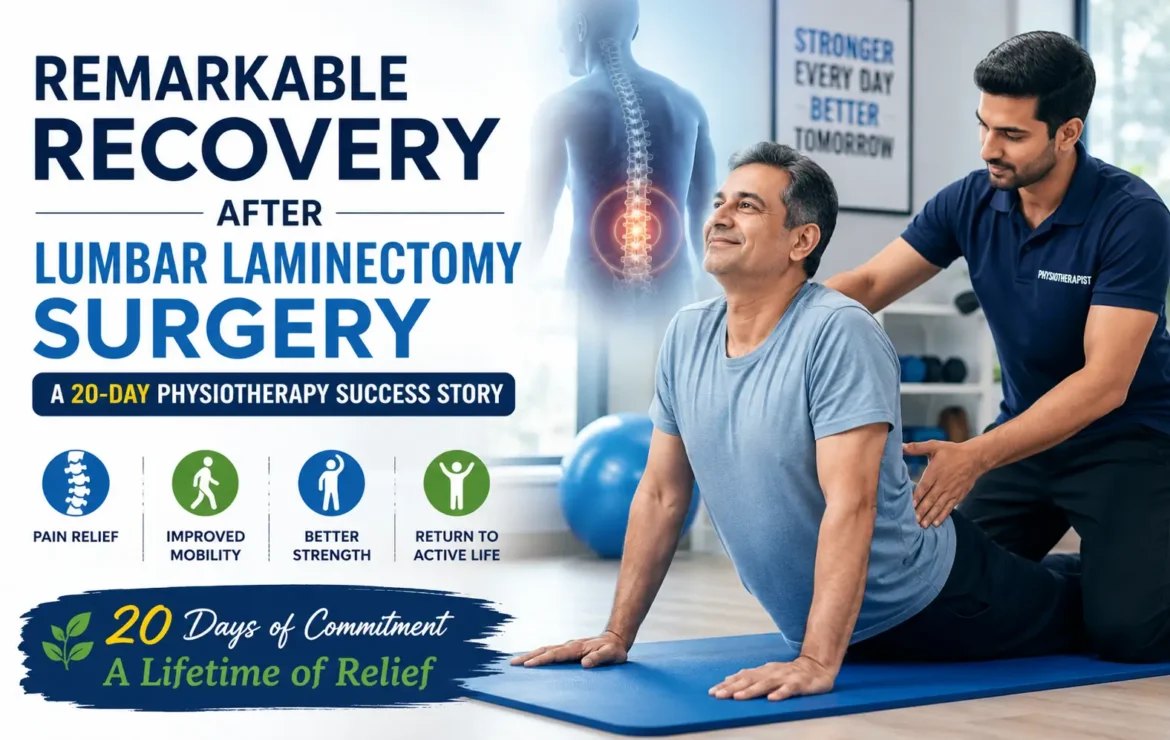
Remarkable Recovery After Lumbar Laminectomy Surgery: A 20-Day Physiotherapy Success Story

Spinal surgeries such as lumbar laminectomy are often performed to relieve pressure on the spinal cord or nerves caused by conditions like spinal stenosis, disc herniation, or other degenerative disorders. While these procedures can provide significant relief, some patients may experience post-surgical complications that affect their recovery journey.
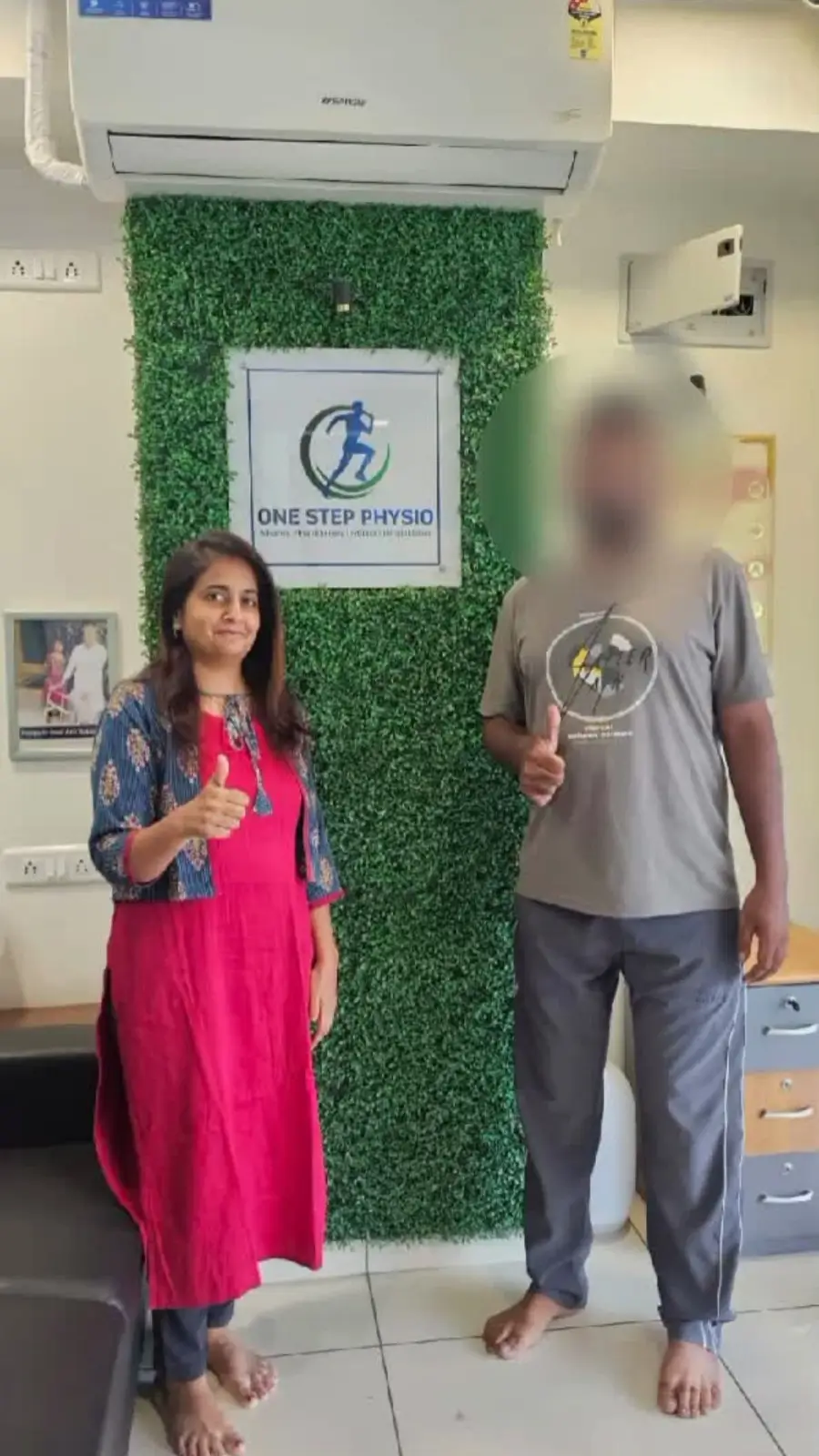
This is the story of one such patient who faced multiple challenges after spinal surgery but successfully regained his mobility, independence, and professional life through a structured physiotherapy rehabilitation program at One Step Physio.
Patient Background
The patient underwent lumbar laminectomy surgery to address a spinal condition that was causing severe discomfort and functional limitations. Unfortunately, after the surgery, he developed a post-operative infection. Although the infection was eventually treated and medically resolved, it left him with significant physical difficulties.
When the patient first visited One Step Physio, he was experiencing:
• Severe lower back pain
• Inability to stand upright
• Difficulty walking normally
• Poor spinal mobility
• Difficulty performing daily activities
• Reduced confidence in movement
• Inability to drive a vehicle
The patient’s situation was particularly challenging because he worked professionally as a driver. Due to his condition, he had been unable to work for nearly four months, resulting in financial stress, emotional frustration, and reduced quality of life.
Simple activities such as standing, walking, climbing stairs, and sitting comfortably became difficult. His posture was significantly affected, and he was unable to maintain an upright standing position for prolonged periods.
Initial Physiotherapy Assessment
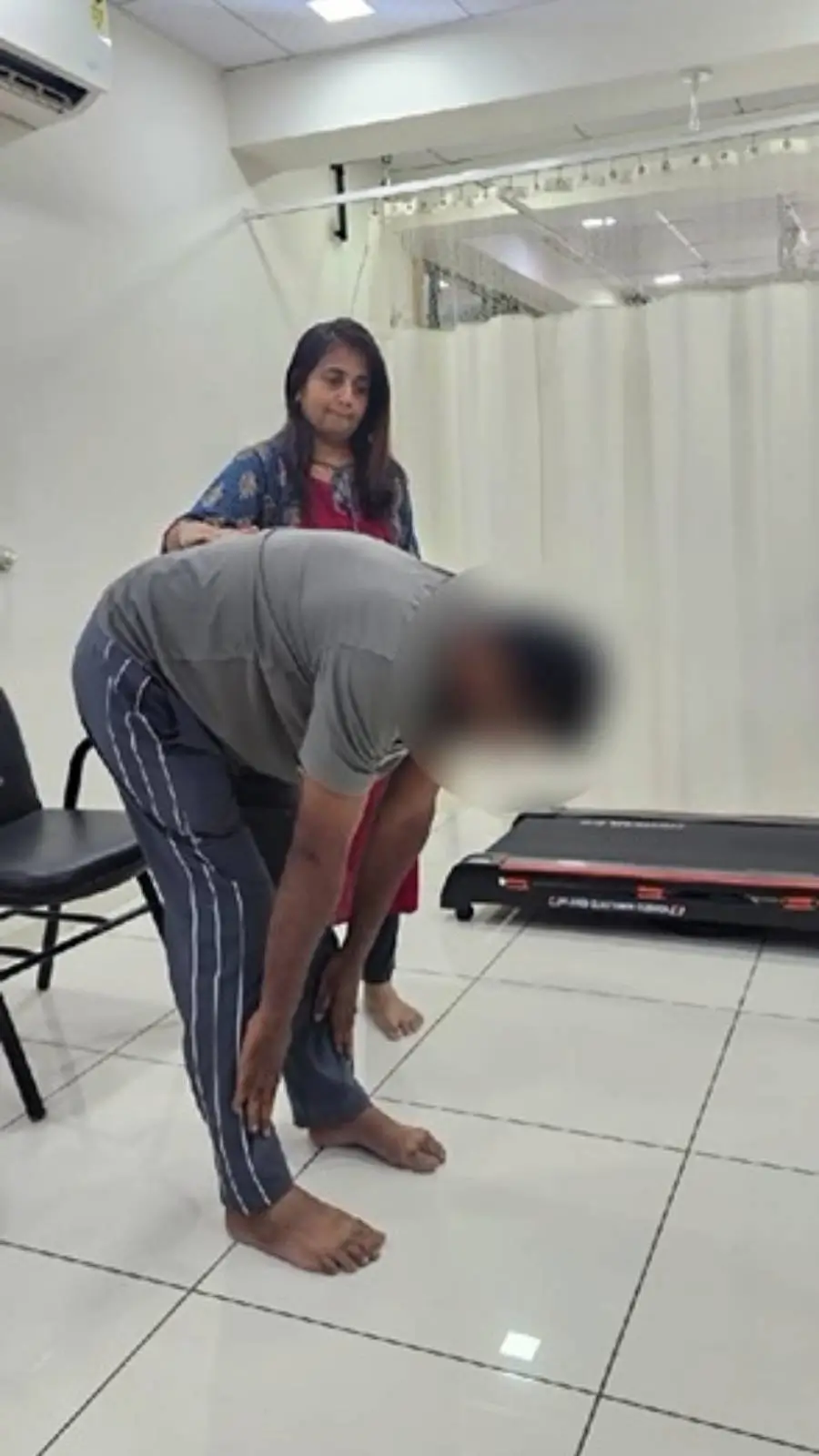
A detailed physiotherapy assessment was conducted to understand the patient’s pain levels, movement restrictions, posture, muscle strength, and functional limitations.
Special attention was given to:
• Surgical history
• Post-infection recovery status
• Pain intensity
• Mobility restrictions
• Core muscle weakness
• Functional limitations related to daily activities and driving
The primary goals of treatment were:
1. Reduce pain and inflammation.
2. Improve spinal mobility safely.
3. Restore posture and standing ability.
4. Strengthen core muscles.
5. Improve walking tolerance.
6. Enable return to daily activities.
7. Facilitate safe return to driving and work.
Treatment Approach
Considering the patient’s surgical history and current condition, a carefully monitored rehabilitation program was designed.
1. Interferential Therapy (IFT)
Interferential Therapy was used to help reduce pain and muscle spasm around the lower back region.
Benefits included:
• Pain relief
• Improved blood circulation
• Reduced muscle tension
• Better comfort during movement
This helped prepare the patient for active rehabilitation exercises.
2. Infrared Radiation Therapy (IR)
Infrared Radiation Therapy was administered to promote tissue healing and relaxation.
The treatment assisted in:
• Improving circulation
• Reducing stiffness
• Enhancing tissue recovery
• Preparing muscles for exercise
3. Cupping Therapy
Cupping therapy was incorporated as a complementary treatment to address muscular tightness and improve soft tissue mobility.
Benefits observed included:
• Reduced muscle tension
• Improved local blood flow
• Enhanced tissue flexibility
• Better comfort during movement
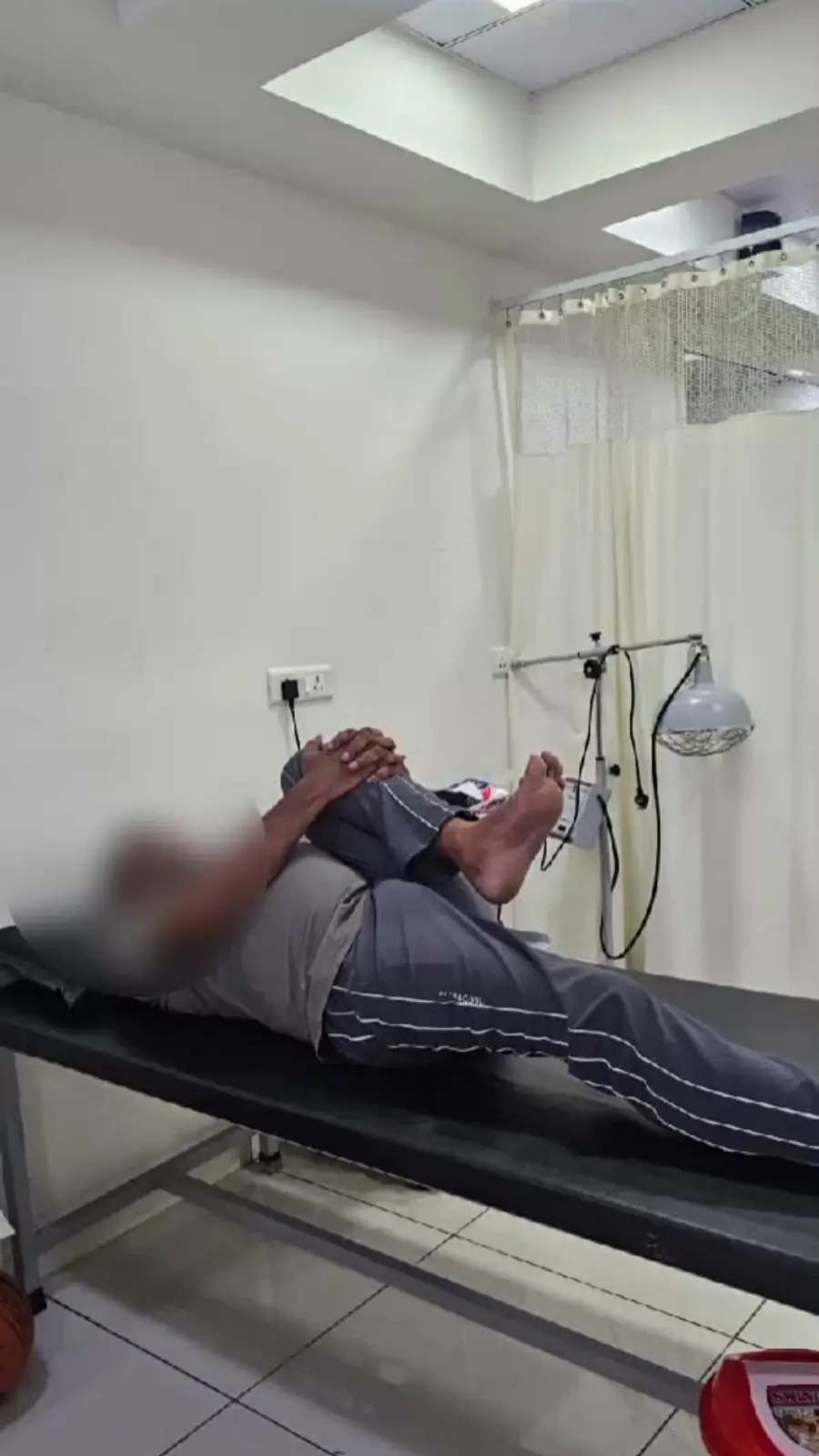
4. Isometric Abdominal Exercises
During the initial phase of rehabilitation, the focus was on activating and strengthening the core muscles without placing excessive stress on the surgical area.
For approximately 5 to 6 days, the patient performed carefully supervised isometric abdominal exercises.
These exercises helped:
• Improve core stability
• Support the spine
• Enhance postural control
• Reduce mechanical stress on the lower back
By the end of this phase, the patient reported a significant reduction in pain and improved confidence in movement.